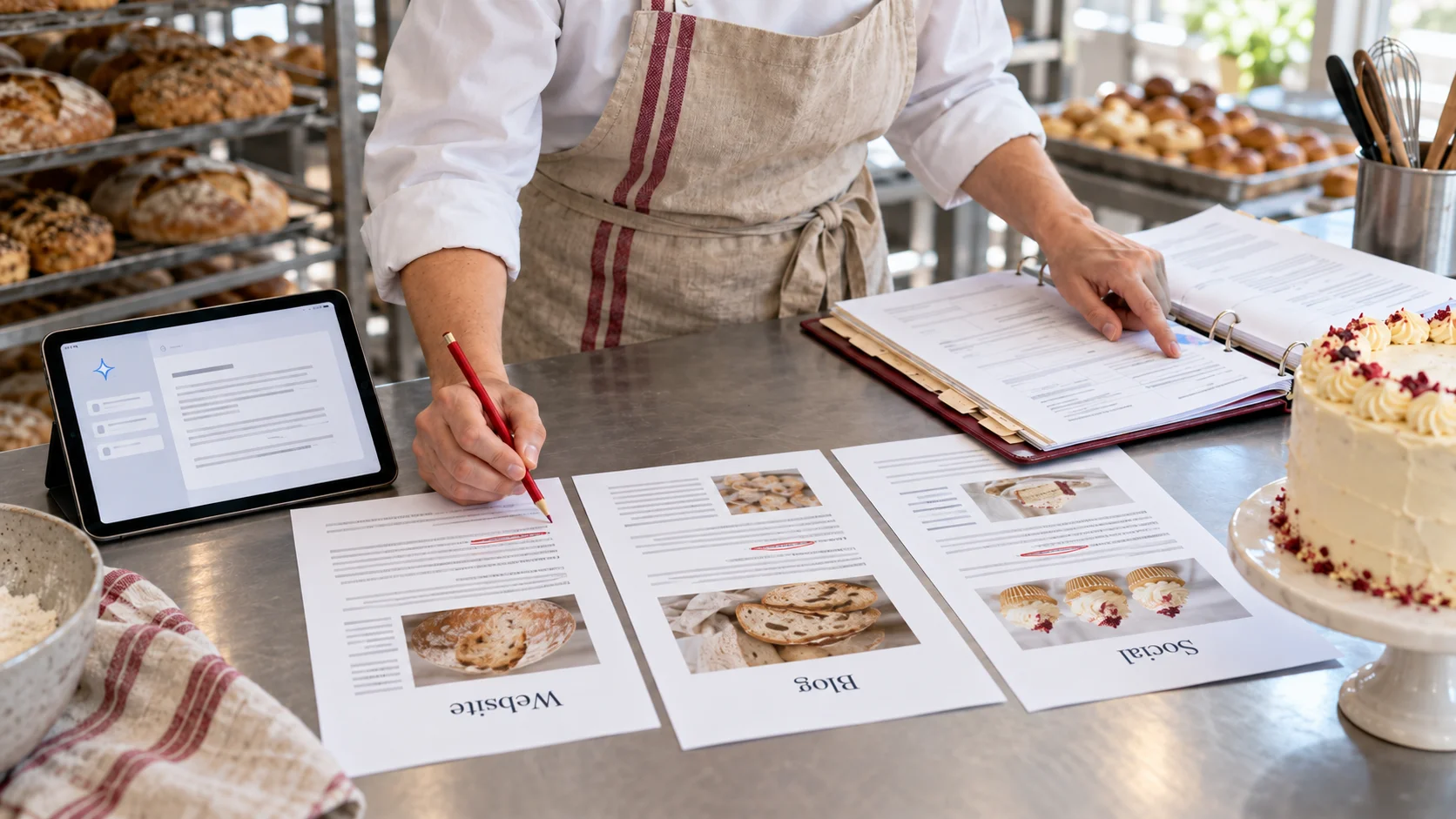
Welcome to the new issue of AIVisCity Weekly — a weekly briefing for those who want to understand how AI tools are changing the way customers discover businesses online.
In this week’s issue:
What’s Happening in AI Search — Google clarifies how AI search optimisation relates to SEO, while Search moves closer to agent-led discovery.
Weekly Insight — how blogging for AI Visibility differs from blogging for traditional SEO, with two short fragments showing the difference.
Try This Yourself — a quick rewrite exercise to make one blog section easier for AI tools to understand and reuse.
Worth Reading — two deeper reads on Google AI Overviews and practical AI search visibility planning.
AIVisCity Answers — Is Blogging useful to help businesses appear in AI answers?
🔍 What’s Happening in AI Search
Google says AI search optimisation is still built on SEO foundations
Google published a new Search Central resource about optimising websites for generative AI features in Search. The guide says SEO best practices remain foundational, but also pushes site owners toward valuable, unique, non-commodity content. Practical implication: small businesses should not chase every new AI optimisation trick. Start with crawlable pages, clear service information, and blog posts that add real experience rather than generic summaries.
Source: https://developers.google.com/search/blog/2026/05/a-new-resource-for-optimizing
Google Search is becoming more conversational and agentic
At Google I/O, Google showed a broader AI push across Search, YouTube, Gemini and other products. Axios reported that Google is embedding AI more deeply into search and discovery experiences, including conversational search in YouTube. Practical implication: customers may increasingly ask AI tools to compare options, explain choices, and monitor information, instead of typing one keyword and clicking one result. Your content needs to answer real questions clearly enough to be used inside those experiences.
Source: https://www.axios.com/2026/05/19/google-ai-youtube-gemini
🔮 Weekly Insight: How to Write Blog Posts for AI Visibility
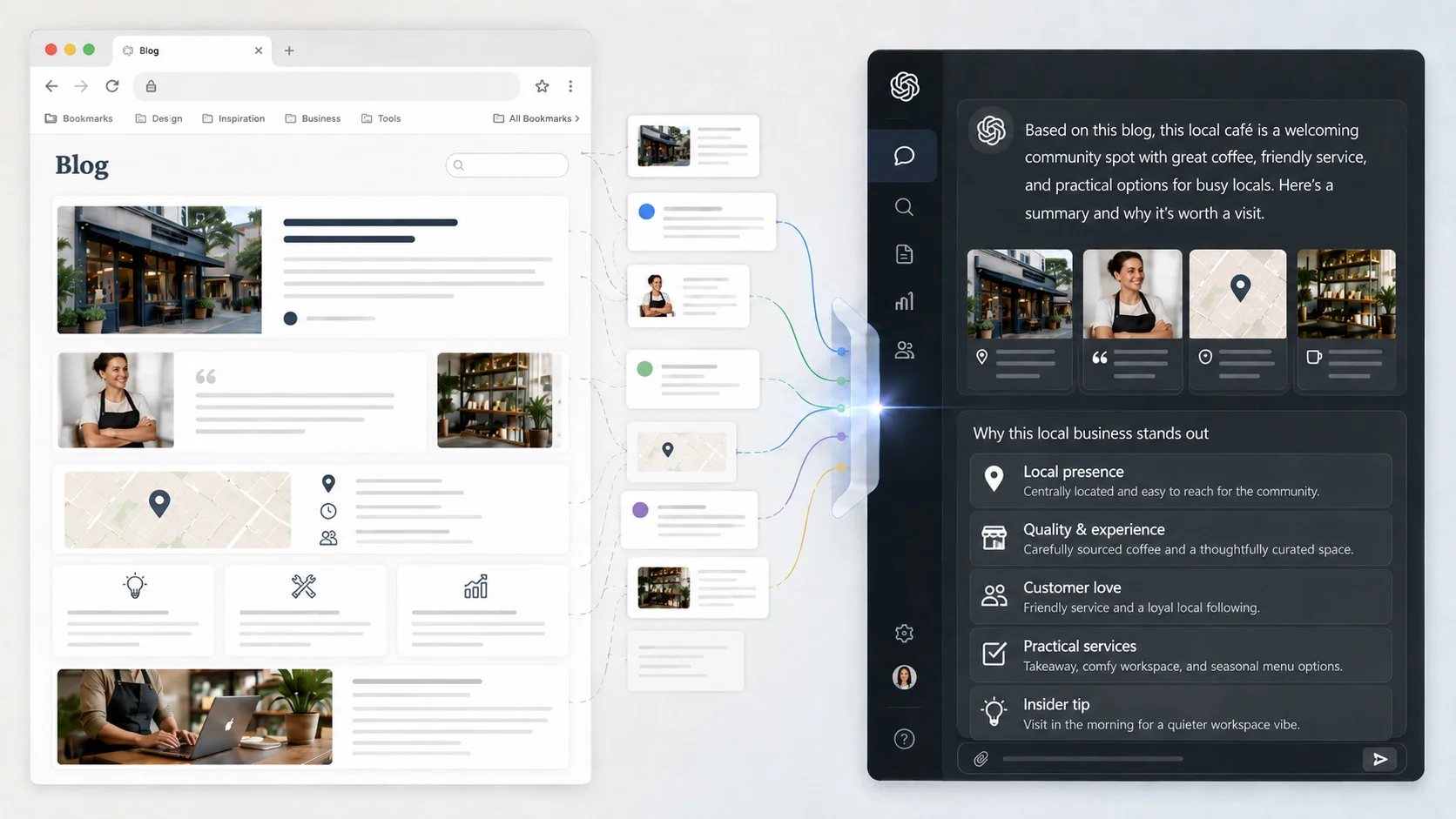
Blogging still matters for both traditional SEO and AI Visibility (We explain why in this week's AIVisCity Answers). However it does not mean the writing tactics for both are the same.
For traditional SEO, a blog often starts with some keywords. The writer asks: what phrase are people searching, how can this page rank, and how can we get the click?
For AI Visibility, the starting question is slightly different. The writer asks: what question is the customer really trying to answer, what decision are they making, and what facts would help an AI recommend the right business?
“SEO helps people find the page. AI Visibility helps AI understand when the page should be used.”
In practice, this means your blog should still have a clear title, useful headings, internal links, and sensible keywords. But it also needs more direct answers, more specific situations, and more business evidence.
Below is a simple example. To avoid making this article too long, we just write a short fragment instead of a full blog for illustration only.
Topic: how to choose an accountant for a small cafe.
Traditional SEO-style fragment:
Choosing the best accountant for your cafe is an important decision. A good cafe accountant can help with bookkeeping, VAT returns, payroll, tax planning, and year-end accounts. If you are looking for a cafe accountant in Manchester, it is important to compare experience, pricing, qualifications, and reviews before choosing the right accounting firm for your business.
Our accountancy team works with cafes, restaurants, and hospitality businesses across Manchester. We provide affordable accounting services for small businesses and help cafe owners stay compliant, save time, and manage their finances with confidence.
This fragment is not bad. It includes the target phrase, the location, the service category, and the broad benefits. It is written to match a search such as “cafe accountant Manchester”.
But for AI Visibility, it is still quite generic. An AI assistant could understand the topic, but it has little detail to decide when this accountant is the best fit.
AI Visibility-style fragment:
If you run a small cafe, choose an accountant who understands daily takings, card payment fees, food stock, staff rota changes, VAT thresholds, and seasonal cash flow. A general small business accountant may be enough if your records are simple. A hospitality-focused accountant becomes more useful when you have weekend staff, supplier invoices, tips, delivery app income, or more than one site.
For a Manchester cafe owner, the useful question is not “who is the best accountant?” It is “who can help me understand whether my cafe is actually profitable after wages, waste, rent, and quiet weekday trade?” Before choosing, ask whether the accountant can review your point-of-sale reports, separate food and drink margins, and explain cash flow in plain English.
This second fragment still supports SEO, but it gives AI more to work with. It names customer situations, decision criteria, service boundaries, and the kind of problem the business solves.
So when you write your next blog, do not only ask “what keyword should this target?” Also ask:
- What exact customer situation is this blog helping with?
- What decision is the reader trying to make?
- What details would prove we understand this problem?
- What should the reader do next?
- What kind of customer is this advice best for?
For small businesses, this is good news. You do not need to publish like a media company. You need to write like a business that has seen the real problem before.
💻 Try This Yourself
Choose one existing blog post on your website. Find one paragraph that looks like the SEO-style fragment above: clear enough, but still broad and generic.
Rewrite it by adding three things: a specific customer situation, one practical decision point, and one detail from your actual experience. For example, change “we help small businesses with accounting” into “we help cafe owners understand whether weekday takings still cover wages, supplier costs, rent, and waste.”
📕 Worth Reading
If you're curious to look deeper into how AI search is changing the internet, these articles are worth a look.
AI Overviews do not simply mirror normal rankings
An academic study of Google AI Overviews found that nearly 30% of cited domains did not appear in the co-displayed first-page results. For small businesses, the useful lesson is that AI visibility can overlap with SEO without being identical to it.
Read: https://arxiv.org/abs/2605.14021
AI search planning now includes measurement and crawler access
Semrush’s AI search playbook explains how teams can benchmark AI visibility, track citations, and check whether AI crawlers can access their content. Small businesses do not need every enterprise metric, but they should know whether key pages can be found and cited.
Read: https://www.semrush.com/blog/how-to-rank-in-ai-search/
✅ AIVisCity Answers
Q: Is Blogging useful to help businesses appear in AI answers?
A: Yes, blogging can help, but only when the posts are clear, useful, and closely related to what the business actually does. Good blog content gives AI tools more public information about your services, locations, expertise, and customer problems, which may increase the chance of your business being matched to relevant AI answers.
Want a more detailed explanation? Check out here.
👋 Until Next Week
How are you seeing AI affect the way people search for businesses in your industry?
See you in the next issue of AIVisCity Weekly