
AIVisCity Weekly #23: Local SEO for AI Visibility Starts with Clear Local Evidence
Welcome to the new issue of AIVisCity Weekly — a weekly briefing for those who want to understand how AI tools are changing the way customers discover businesses online.
In this week’s issue:
What’s Happening in AI Search — why stale public information creates an AI representation risk, and new research on how people engage with AI Overviews.
Weekly Insight — how to retain the Local SEO work that brings nearby customers to you, then add clearer local evidence for AI-assisted discovery.
Try This Yourself — check one high-value local service against the detailed question a customer may ask an AI assistant.
Worth Reading — a study on measuring AI visibility across a topic, plus a practical warning about outdated business information.
AIVisCity Answers — how can I get AI recommend my business in the areas I serve?
🔍 What’s Happening in AI Search
Stale public information can give AI the wrong picture of your business
Recent article in TechRadar Pro argues that many organisations have left old or contradictory material across websites, documents and third-party properties. It warns that this can lead AI tools to present an inaccurate picture of the business. The action is sensible: make a short inventory of your live local pages, profiles and documents, then update or remove information that no longer describes your current service, location or hours.
Research finds AI Overviews draw more attention than traditional links
An eye-tracking study published at the ACM SIGIR conference found that people still engaged with traditional search links, but engaged significantly more with the generative AI content placed above them. It was just a lab study of search behaviour, but it means when your business appears in AI Overview, you should care about whether the answer represents your service clearly, as well as where your page ranks beneath it.
🔮 Weekly Insight: Local SEO for AI Visibility Starts with Clear Local Evidence
Local SEO was built to win Maps and nearby searches. It still brings customers to you. AI assistants can turn that request into a buying question — who is nearby, suitable, available and credible — before the customer sees a list.
Local SEO in a nutshell
SEO helps your website appear for relevant searches. Local SEO focuses on place-based discovery through Search, Maps and local organic results. It is essential for a shop, restaurant, clinic, professional practice or service-area business where proximity, availability or local knowledge shapes the choice.
If customers need you in a particular area, Local SEO is a core part of how they assess whether you are an option.
Keep the Local SEO foundations
Many traditional local SEO practices remain important even in the age of AI search.
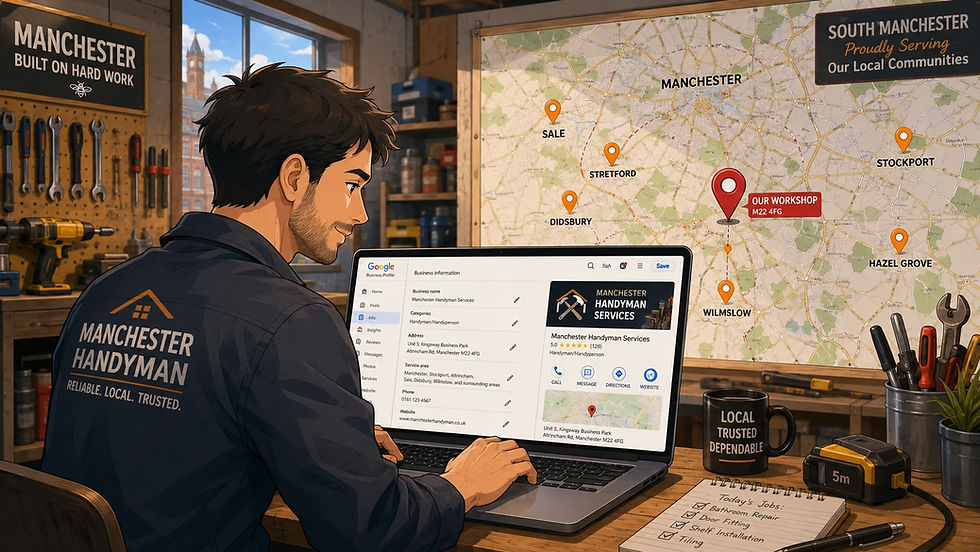
Start with a verified Google Business Profile: the right category, current hours, a precise address or service area, services and photos. Keep your website crawlable, mobile-friendly and clear about what you do and where you work. Earn genuine reviews, reply helpfully and correct wrong information.
Google’s local results still consider relevance, distance and prominence. A vague or outdated profile leaves a weakness before an AI-assisted search journey begins.
Local SEO for AI: A fuller answer to the local question
AI-assisted local questions carry constraints that a category cannot settle. An emergency boiler engineer in Bristol may need to serve flats, work after 6pm and explain call-out charges. Your profile can establish “plumber”; public evidence needs to establish the fit.
List the most common questions from customers, then build priority service pages around them. State the area, situations, availability, qualifications or limits, and next step. Put those details in readable page text instead of scattering the answer across the site.
Keep the same core facts current across your website, Business Profile and relevant independent listings. AI draws local-profile information from official sites, third-party data and customer contributions, so old contact details or services can create contradictions. Update the places customers use to compare you.
Add proof that helps a local buyer judge the fit. A case example, original job photos, a named specialist, clear policies or a review describing the work can show why you suit a situation. Specific public evidence supports a stronger recommendation than a category match alone.
Ignore the myths
The pressure to appear in AI answers has revived poor Local SEO advice. Stuffing city names into your Business Profile name can breach Google’s guidelines and risk suspension, while buying reviews violates Google policy. You also do not need special AI schema or an llms.txt file for AI to understand your websites.
Key takeaway
Local SEO gets you found nearby. AI Visibility grows when it answers the customer’s whole local question: what you do, where, when and why they can trust you.
💻 Try This Yourself
Choose the local service that brings you the most valuable enquiries. Write the detailed question a customer might ask, including one real constraint such as their area, property type, availability or budget.
Read your Business Profile and the matching service page as if you were that customer. Can you confirm the service area, fit, availability and next step without guessing? Add the missing fact to the appropriate page or profile, then note the date and question so you can check it again next month.
📕 Worth Reading
If you're curious to look deeper into how AI search is changing the internet, these articles are worth a look.
One successful prompt does not show whether you own a topic
Semrush studied 50,000 brands across 1,094 US categories, using five related ChatGPT prompts per topic. Its results are ChatGPT- and dataset-specific, so do not generalise them. Use the method: test connected customer questions rather than treating one mention as a verdict.
ChatGPT’s product results draw on first- and third-party data
OpenAI says ChatGPT product results can use first- and third-party metadata and other third-party content. Merchant results can consider availability, price, quality and seller status. For local retailers, keep stock, price and collection details accurate across sales channels; appearing is never guaranteed.
✅ AIVisCity Answers
Q: How can I get AI recommend my business in the areas I serve?
A: Clearly state the places you serve on your website and keep those details consistent across your Google Business Profile and relevant directories. Add useful information about the services you provide in each area, rather than only listing place names.
Want a more detailed explanation? Check out here.
👋 Until Next Week
If you find AIVisCity useful and want an easier way to keep up with practical AI Visibility updates for small businesses, you can use the button below to add AIVisCity as a Preferred Source in Google Search.

How are you seeing AI affect the way people search for businesses in your industry?
If you have noticed changes — or if you tried the quick check in this issue — we’d love to hear your observations. Feel free to share them in the comments.
See you in the next issue of AIVisCity Weekly



Comments