Welcome to the new issue of AIVisCity Weekly — a weekly briefing for those who want to understand how AI tools are changing the way customers discover businesses online.
In this week’s issue:
What’s Happening in AI Search — Meta brings AI search closer to public social content, while a German ruling shows why AI answers about businesses need watching.
Weekly Insight — how a small business can improve AI Visibility even without a website.
Try This Yourself — a quick no-website visibility check you can complete in minutes.
Worth Reading — two deeper reads on chatbot optimisation and wider digital signals.
AIVisCity Answers — How Often Should I Check and Optimise My Business's AI Visibility?
🔍 What’s Happening in AI Search
Meta’s AI Mode makes public social content more searchable
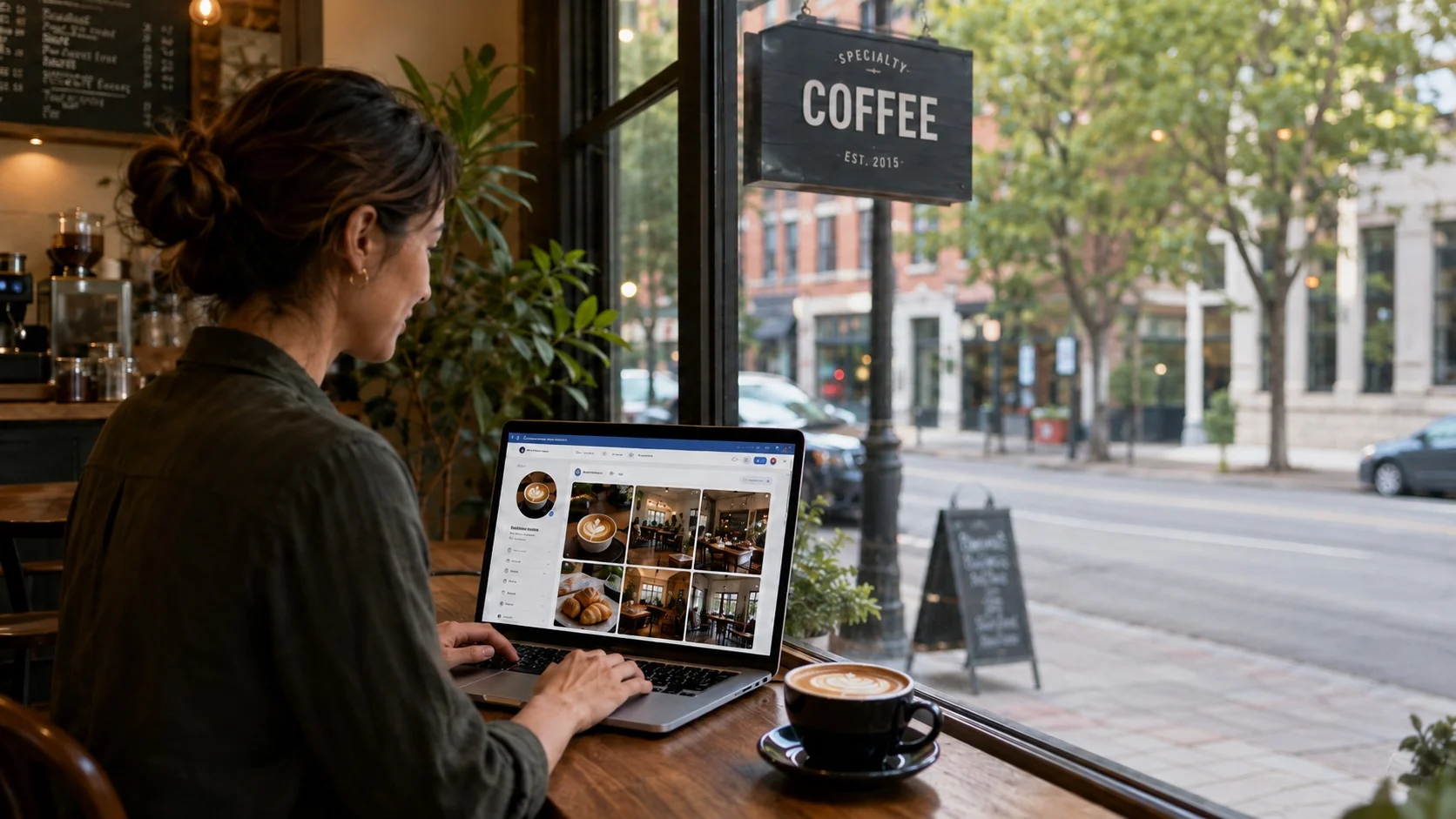
Meta says its new Facebook AI Mode gives answers based on what people publicly share across its apps, including Groups and Reels, instead of only showing links. This is an official product announcement, so the narrow takeaway is about Meta’s own search experience, not every AI assistant. Practical implication: if your business relies on Facebook or Instagram, treat public posts as discovery material. A post that clearly says “same-day boiler repairs in Croydon” is more useful than a vague update saying “busy week helping clients.”
Source: https://about.fb.com/news/2026/06/new-ai-tools-to-help-you-make-things-happen-on-facebook/
AI answers can create reputation risk when they get business facts wrong
The Decoder reports that a Munich court ruled Google could be directly liable for false claims made in AI Overviews about two publishers. Google says AI Overviews are designed to reflect web information and is reviewing the decision, which is not final. Practical implication: small businesses should occasionally check how AI tools describe them, especially around sensitive services, pricing, reputation, or complaints. If a wrong pattern appears, fix the clearest public sources first: your Google Business Profile, social profiles, directory listings, and review responses.
Source: https://the-decoder.com/landmark-german-ruling-declares-googles-ai-overviews-are-googles-own-words-and-makes-it-liable-for-false-answers/
🔮 Weekly Insight: Can You Improve AI Visibility Without a Website?
A website is still a useful anchor for AI Visibility. It gives your business one place to explain services, prices, proof, FAQs, and contact details. It also gives AI systems a source they can crawl, compare, and quote.
But a website is not always the first job. A simple site is cheap to build now. The harder part is keeping it alive: removing old offers, updating prices, checking contact details, adding fresh examples, and making sure nothing important has gone stale. Some businesses can operate perfectly well from a profile, booking platform, marketplace page, or word of mouth.
The real test is not whether you own a website. It is whether the public evidence around your business is clear enough to be trusted and repeated.
"No website does not mean no signals."
In practice, AI tools often work from fragments: profiles, reviews, social posts, directories, maps, videos, local mentions, and customer discussions. If those fragments are vague, the business is hard to place. If they carry useful detail, the business becomes easier to understand.
Start by choosing one primary public record. For a local business, that may be Google Business Profile or Apple Business Connect. For a consultant, it may be LinkedIn. For a shop, it may be Etsy, Amazon, Deliveroo, Treatwell, Fresha, or another marketplace. Wherever customers would naturally check you first, make the basics current: category, services, location or delivery area, availability, prices, photos, and booking details.
Then treat public Facebook posts as evidence, not just updates. That matters more now Meta is adding AI Mode to Facebook search. A post saying "Bathroom refresh in Woking: new tiles, leak repair, and reseal completed in two days" gives far more context than "another happy client." Include the problem, service, location, outcome, and next step.
Reviews also need detail. Ask for honest reviews after real work, but prompt the customer to mention the problem, service, location, and result. "Fixed our cafe fridge before lunchtime in Leeds" tells a clearer story than "great service."
You can also borrow context from places people already trust. Therapists can use professional directories. Restaurants should keep menu and booking platforms accurate. Local trades can look for chamber, council, supplier, event, or neighbourhood listings.
Finally, pay attention to Reddit and public Q&A spaces. Do not spam them. Look for real questions and answer properly when the rules allow it. A bike repair shop might explain how to diagnose a slipping chain, then mention its city only if relevant. Helpful public answers can become evidence around your expertise.
When we test no-website businesses, the strongest ones are rarely the loudest. They are the ones leaving clear evidence where customers and AI systems can actually see it.
💻 Try This Yourself
Choose one recent job, sale, appointment, order, or customer question.
Write a short public Facebook or Instagram post using five details:
the customer situation
the service or product
the location or service area
the outcome
the next step
For example: “Emergency lock change in Hove after a lost key. Same-day visit, new cylinder fitted, two spare keys supplied. Call before 3pm for today’s availability.”
This takes minutes, but it turns an ordinary update into a useful discovery signal.
📕 Worth Reading
If you're curious to look deeper into how AI search is changing the internet, these articles are worth a look.
Chatbot optimisation is already creating spam pressure
The Atlantic reports on “sloptimization”: content made to influence chatbot recommendations, including self-serving listicles and planted mentions. Treat it as analysis, not a playbook. Small businesses should build public proof: service explanations, real reviews, and credible mentions.
Read: https://www.theatlantic.com/technology/2026/06/google-search-ai-optimization/687495/
AI visibility depends on the wider digital footprint
This TechRadar Pro opinion piece argues that AI systems interpret a brand’s wider digital footprint, including media coverage, Reddit discussions, YouTube, reviews, and partner mentions. It is vendor-authored, so treat it cautiously. For small businesses, the lesson is consistency across public signals.
Read: https://www.techradar.com/pro/agentic-search-optimization-reshapes-brand-visibility-in-ai-search
✅ AIVisCity Answers
Q: How Often Should I Check and Optimise My Business's AI Visibility?
A: Most small businesses should check their AI visibility once a month, and review it again after major changes such as new services, new locations, website updates, or a noticeable shift in enquiries. Optimisation takes time to show results, so daily or weekly checking is usually not useful.
Want a more detailed explanation? Check out here.
👋 Until Next Week
If you find AIVisCity useful and want an easier way to keep up with practical AI Visibility updates for small businesses, you can use the button below to add AIVisCity as a Preferred Source in Google Search.
How are you seeing AI affect the way people search for businesses in your industry?
See you in the next issue of AIVisCity Weekly