
Welcome to AIVisCity Weekly — a free weekly briefing helping small business owners understand how AI search is changing customer discovery, and what practical steps they can take next.
In this week’s issue:
What’s Happening in AI Search — Google strengthens its AI-content guidance, while Airbnb adds AI-powered discovery and comparisons.
Weekly Insight — use AI to turn your business knowledge into useful, verifiable content for customer discovery.
Try This Yourself — draft and check one answer to a real customer question.
Worth Reading — why a citation can benefit a competitor, and how business websites contribute to local AI answers.
AIVisCity Answers — what to include in a customer case study for AI recommendations.
🔍 What’s Happening in AI Search
Google strengthens its guidance on reviewing AI-generated content
Google updated its generative-content guide on 1 October, adding references to its quality-rater guidelines. The guide stresses manual fact-checking before publication, including titles, descriptions and other information that can appear in Search. It also warns about producing many pages without adding value. Review your article and search description together so an invented promise in the metadata does not misrepresent your work. We explore how to put that principle into practice in this week’s Weekly Insight.
Source: Google Search Central
Airbnb brings AI into the search for a suitable stay
Airbnb’s 30 September update introduces search in guests’ own words, AI-written listing descriptions and side-by-side home comparisons. The AI features are starting in the US. For hosts and businesses offering experiences or services through Airbnb, check that your listing clearly describes what guests can expect. Airbnb’s example turns “baby” into filters for amenities such as cribs and toys; accurate amenity details give guests useful information when they narrow their choices. UK hosts can prepare their listings while watching for wider availability.
Source: Airbnb’s fall update
🔮 Weekly Insight: Use AI to Create Content Worth Finding
When someone asks an AI assistant for a business that meets a specific need, polished copy alone gives them little to judge. They need details: what you offer, who it suits and evidence behind your claims. AI can help you make that information clearer across your website, blog and social posts, provided you keep control of the substance.
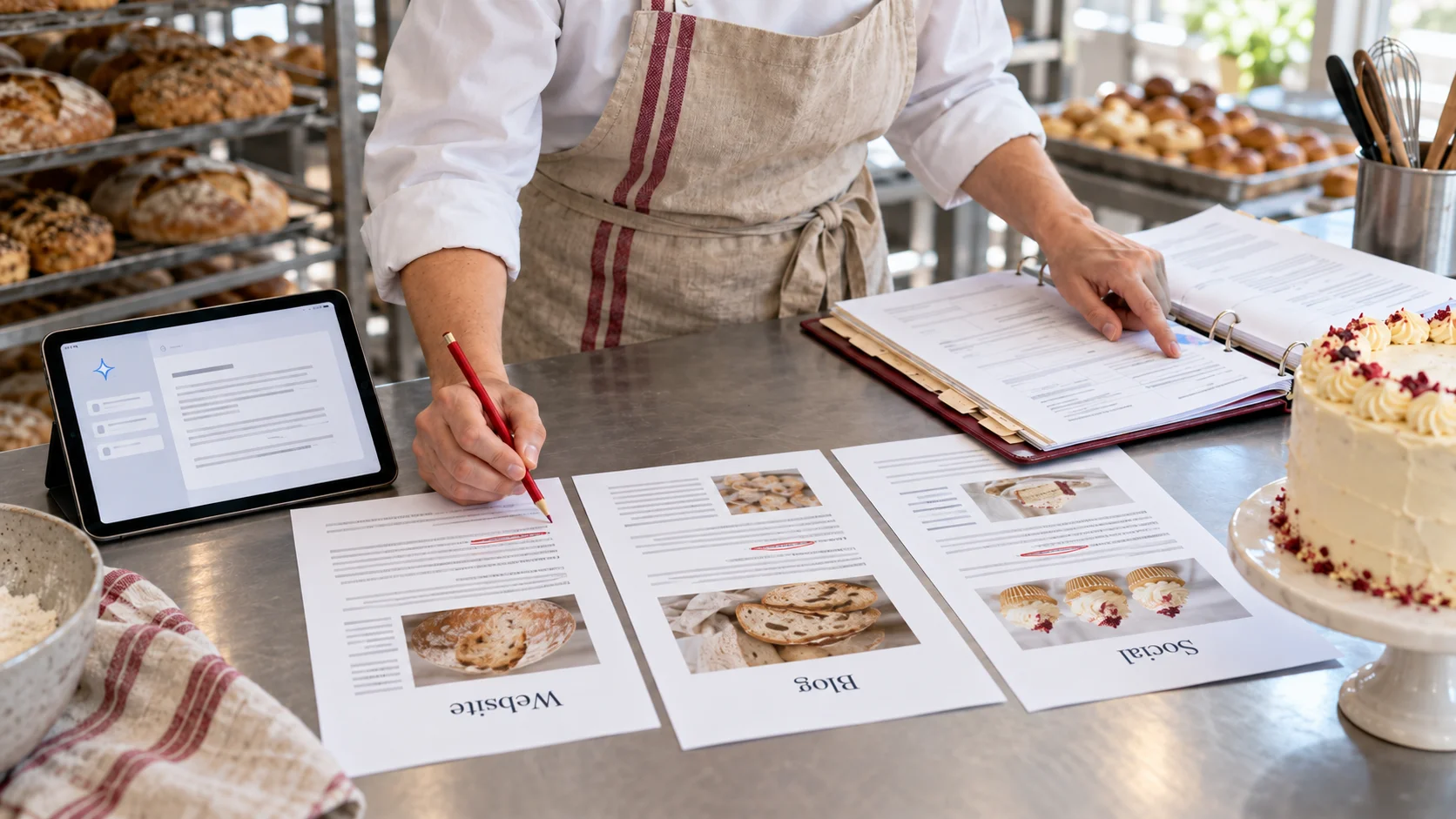
Imagine you run a bakery and customers regularly ask how much notice a celebration cake needs. AI can organise your ordering policy into a clear website answer, help explain the process in a blog and shorten it for a social post. You save drafting time and make an existing customer question easier to answer consistently. Your experience is the raw material; AI helps you explain it.
What do the platforms actually say?
Google’s guidance recognises useful AI-assisted content and warns against generating pages without added value. Its AI Search documentation applies established SEO foundations to AI Overviews and AI Mode. You can use AI to improve how you explain your offer while keeping the information accurate and useful.
OpenAI and Perplexity’s publisher guidance focuses on crawler access. We believe Google’s emphasis on useful, accurate content is also the right working principle for these tools: use AI to explain genuine knowledge that customers can rely on.
Three DOs for content that supports discovery
DO answer a specific customer need with your own evidence. Give AI your verified lead times, options and relevant experience, then ask it to explain them clearly. For the bakery, include the notice required for custom decorations and explain which simpler cakes customers can order sooner, if that applies. Someone asking an assistant about a last-minute order then has concrete details to judge whether your bakery can help.
DO keep the useful answer on an accessible website page. Publish the bakery’s ordering conditions as readable text and link the page from related content. Google explicitly recommends textual information and internal links for its AI features; a social caption can direct readers to the complete answer.
DO check what AI tools say after you publish. In Seer’s brand experiment, Perplexity initially linked to Seer’s article and mentioned the retention figures. It later stopped quoting those figures, then used them again after Seer updated the article.
Use AI tools to ask questions about your business. If the answer is incorrect or outdated, locate the source of the information and fix the error. Wait a while, for example one or two weeks, and check again.
Three DON’Ts that waste the opportunity
DON’T generate dozens of near-identical pages to cover every wording. Give each page a distinct customer purpose and useful detail. Google warns that scaled, low-value generation may violate its spam policy.
DON’T make a self-written “best businesses” list your visibility strategy. Ahrefs’ experiment found that assistants sometimes cited its promotional conference pages while recommending competitors. A page that puts your business first can still send attention elsewhere.
DON’T let AI invent the reasons you deserve a recommendation. Remove unsupported awards, customer results and service promises from every format. A bakery’s invented next-day availability can mislead the customer you hoped to attract.
AI can be a great tool for producing high-quality content. Human steering, judgement and verification ensure it gives customers real value. One carefully researched and reviewed article is worth far more than 100 randomly generated pieces of AI slop.
💻 Try This Yourself
Choose one question customers ask before buying, such as “How much notice do you need for a celebration cake?” Write down the verified answer, including any exceptions, using only business information you are comfortable making public. Ask your AI writing tool to turn those facts into a short website answer and a social caption pointing to that page. Tell it to flag missing facts and use only the information supplied.
Compare both drafts with your notes and correct every unsupported claim. Save the approved website answer and caption together. You now have two consistent pieces of content ready for publication, grounded in a real customer need.
📕 Worth Reading
If you're curious to look deeper into how AI search is changing the internet, these articles are worth a look.
A citation can send the recommendation elsewhere
Ahrefs’ July experiment tracked promotional pages across four assistants. Some conference-page citations accompanied recommendations for competitors. The small vendor study gives you a useful check: read which business the answer recommends before counting a citation as a win.
Read: Ahrefs’ experiment
Business websites supply useful detail for local AI answers
BrightLocal’s September local-search study found that business websites supplied 42% of citations across ChatGPT and Google’s AI search features. Its analysis highlights clear service and location pages as useful sources. Check that your website answers the customer questions you want to be found for, with specific services, locations and supporting evidence.
Read: BrightLocal’s local AI search study
✅ AIVisCity Answers
Q: What should I include in a customer case study to help my business appear in AI recommendations?
A: Include the customer's problem, the service you provided, where the work took place and the result you can support with evidence. These details can give AI tools a specific example of your experience to draw on when answering a relevant question. Recommendations are not guaranteed.
Want a more detailed explanation? Check out here.
👋 Until Next Week
If you find AIVisCity useful and want an easier way to keep up with practical AI Visibility updates for small businesses, you can use the button below to add AIVisCity as a Preferred Source in Google Search.

How are you seeing AI affect the way people search for businesses in your industry?
See you in the next issue of AIVisCity Weekly